Thursday, January 27, 2011

2011 Volkswagen Race Touareg 3 Qatar Concept


At the first Qatar Motor Show (26-29 January, 2011), Volkswagen has presented a slightly tamer version of the Touareg 3 that started in the Dakar Rally at the beginning of January 2011; this 228 kW / 310 PS Volkswagen could very well be the world's most talented street-legal SUV.

This is a genuine Rally motorsport vehicle, like the one that was still touring South America in the Dakar Rally two weeks ago and was built to withstand the toughest rally race in the world. The vehicle now being shown in Qatar is a version of the Race Touareg 3 - an SUV that can sprint to 100 km/h in less than six seconds - that is legally approved for use on public roadways. The just over two metre wide body was slightly modified for road use. Instead of 16-inch wheels, new 18-inch wheels from BBS with a gold look are being used. The "Race Touareg" signature - also in a golden colour - stretches the entire length of the vehicle's sides. In turn, it is perfectly coordinated with the exterior paint in "Magic Morning," a white that has a slight gold shimmer to it.

The interior was completely redesigned; all that remained unmodified was the safety cage. Without compromises also means an interior that offers easy controls and is ergonomic. The interior has an extremely well-organised appearance with focus on the driving machine, and it is equipped with Recaro racing bucket seats. Designers created an interior in so-called "Stealth look" that is reminiscent of the aircraft of the same name. In tribute to the Dakar Rally, the Dakar victories are etched in the anodised aluminium of the centre console, right next to the "Race Touareg" signature.

Other trim elements are treated in Matt Carbon. Tuned to this is the roll cage in "Serpentino Grey Metallic." Interior designers have upholstered the seat side supports and the door trim panels with Nubuk leather in "Black" and "Pure Grey," while the centre seat panels are made from perforated Nappa leather in "Titan Black." Additional accents include the two-tone seams and silver piping on the seat covers and safety-related items painted in "Tornado Red." The only other ingredient that is needed is some time to explore the world on a "360 degree route" in this uncompromising car.

Tuesday, January 25, 2011

2011 Volkswagen XL1 Concept


Future mobility is one of the most stimulating topics of our time. The key question here: Just how much could the energy consumption of cars be reduced if all the stops were pulled out for efficiency? There is now an answer to this question, and Volkswagen is delivering it in the form of the new Volkswagen XL1 Concept. Combined fuel consumption: 0.9 l/100 km. No other hybrid car powered by an electric motor / internal combustion engine combination is more fuel efficient. The prototype makes its world debut at the 2011 Qatar Motor Show (26-29 January, 2011).

Conceptually, the Volkswagen XL1 represents the third evolutionary stage of Volkswagen's 1-litre car strategy. When the new millennium was ushered in, Prof. Dr. Ferdinand Piëch, who is today Chairman of the Supervisory Board of Volkswagen AG, formulated the visionary goal of bringing to the market a production car that was practical for everyday use with a fuel consumption of 1.0 litre per 100 km. In the new XL1, Volkswagen is demonstrating that this goal is now within reach.

The new Volkswagen XL1 attains a CO2 emissions value of 24 g/km, thanks to a combination of lightweight construction (monocoque and add-on parts made of carbon fibre), very low aerodynamic drag (Cd 0.186) and a plug-in hybrid system − consisting of a two cylinder TDI engine (35 kW/48 PS), E-motor (20 kW/27 PS), 7-speed dualclutch transmission (DSG) and lithium-ion battery. The results: with fuel consumption of 0.9 l/100 km, the new Volkswagen XL1 only emits 24 g/km CO2. Since it is designed as a plug-in hybrid, the XL1 prototype can also be driven for up to 35 kilometres in pure electric mode, i.e. with zero emissions at point of use. The battery can be charged from a conventional household electric outlet. Naturally, battery regeneration is also employed to recover energy while slowing down and store as much of it as possible in the battery for re-use. In this case, the electric motor acts as an electric generator.
Volkswagen XL1 Concept (2011)


Despite the very high levels of efficiency, developers were able to design a body layout that offers greater everyday practicality, incorporating side by side seating rather than the tandem arrangement seen in both the first 1-litre car presented in 2002 and the L1 presented in 2009. In the new Volkswagen XL1, wing doors make it easier to enter and exit the car. Further progress has been made by manufacturing body parts from carbon fibre reinforced polymer parts (CFRP), a technique used in Formula 1 car construction. Once again, Volkswagen has successfully achieved significant reductions in production costs - an important step forward to make viable a limited production run of the XL1. Background: together with suppliers, Volkswagen has developed and patented a new system for CFRP production in what is known as the aRTM process (advanced Resin Transfer Moulding).

The most efficient car in the world

The new Volkswagen XL1 Concept shows the way forward for extreme economy vehicles and clean technologies. It also demonstrates that such cars can also be fun. The feeling when driving the XL1 is truly dynamic − not based on pure power, rather on its pure efficiency. Two examples:
To travel at a constant speed of 100 km/h, the prototype only needs 6.2 kW/8.4 PS - a fraction of the performance of today's cars (Golf 1.6 TDI with 77 kW and 7-speed DSG: 13.2 kW/17.9 PS).
In electric mode, the Volkswagen XL1 needs less than 0.1 kWh (82 Wh/km) to complete a one kilometre driving course. These are record values.

When the full power of the hybrid system is engaged, the Volkswagen prototype accelerates from 0 to 100 km/h in just 11.9 seconds; its top speed is 160 km/h (electronically limited). Yet these numbers alone do not tell the whole story: Since the XL1 weighs just 795 kg, the drive system has an easy job of propelling the car. When full power is needed, the electric motor, which can deliver 100 Newton metres of torque from a standstill, works as a booster to support the TDI engine (120 Newton metres torque). Together, the TDI and E-motor deliver a maximum torque of 140 Newton metres in boosting mode.

Plug-in hybrid concept

With the new XL1, Volkswagen is implementing a plug-in hybrid concept, which utilises the fuel efficient technology of the common rail turbodiesel (TDI) and the dual clutch transmission (DSG). The TDI generates its stated maximum power of 35 kW/48 PS from just 0.8 litre displacement. The entire hybrid unit is housed above the vehicle's driven rear axle. The actual hybrid module with electric motor and clutch is positioned between the TDI and the 7-speed DSG; this module was integrated in the DSG transmission case in place of the usual flywheel. The integrated lithium-ion battery supplies the E-motor with energy. The high voltage energy flow from and to the battery or E-motor is managed by the power electronics, which operates at 220 Volts. The Volkswagen XL1's body electrical system is supplied with the necessary 12 Volts through a DC/DC converter.

Interplay of E-motor and TDI engine: The E-motor supports the TDI in acceleration (boosting), but as described it can also power the XL1 Concept on its own for a distance of up to 35 km. In this mode, the TDI is decoupled from the drivetrain by disengaging a clutch, and it is shut down. Meanwhile, the clutch on the gearbox side remains closed, so the DSG is fully engaged with the electric motor. Important: The driver can choose to drive the Volkswagen XL1 in pure electric mode (provided that the battery is sufficiently charged). As soon as the electric mode button on the instrument panel is pressed, the car is propelled exclusively by electrical power. Restarting of the TDI is a very smooth and comfortable process: In what is known as "pulse starting" of the TDI engine while driving, the electric motor's rotor is sped up and is very quickly coupled to the engine clutch. This accelerates the TDI to the required speed and starts it. The entire process takes place without any jolts, so the driver hardly notices the TDI engine restarting.

When the XL1 is braked, the E-motor operates as a generator that utilises the braking energy to charge the battery (battery regeneration). In certain operating conditions the load shared between the TDI engine and the electric motor can be shifted so that the turbodiesel is operating at its most favourable efficiency level. The gears of the automatically shifting 7-speed DSG are also always selected with the aim of minimising energy usage. The engine controller regulates all energy flow and drive management tasks, taking into account the power demanded at any given moment by the driver. Some of the parameters used to realise the optimum propulsion mode for the given conditions are: accelerator pedal position and engine load, as well as the energy supply and mix of kinetic and electrical energy at any given time.

Two-cylinder TDI uses mass production technology: The 0.8 litre TDI (35 kW/48 PS) was derived from the 1.6 litre TDI, which drives such cars as the Golf and Passat. The 0.8 TDI exhibits the same data as the 1.6-litre TDI common rail engine in terms of cylinder spacing (88 mm), cylinder bore (79.5 mm) and stroke (80.5 mm). In addition, the Volkswagen XL1 Concept's two-cylinder and the mass produced four cylinder share key internal engine features for reducing emissions. They include special piston recesses for multiple injection and individual orientation of the individual injection jets. The excellent, smooth running properties of the common rail engines were transferred to the two cylinder engine. within addition, a balancer shaft that is driven by the crankshaft turning at the same speed optimises smooth engine running.

Meanwhile, the TDI's aluminium crankcase was constructed to achieve high rigidity and precision, which in turn leads to very low friction losses. With the goal of reducing emissions, exhaust gas recirculation and an oxidation catalytic converter as well as a diesel particulate filter are used. Equipped in this way, the 0.8 TDI already fulfils the limits of the Euro-6 emissions standard.

Also designed for efficiency is the vehicle's cooling system. Engine management only cools the TDI by activating an externally driven electric water pump when engine operating conditions require it. This cooling system includes an automatically controlled air intake system at the front of the vehicle to reduce cooling system drag. This thermal management strategy also contributes towards reduced fuel consumption. A second electric water pump, which is also used only as needed, circulates a separate lower temperature coolant loop to cool the starter generator and power electronics.

CFRP body is a technical masterpiece

The development team made extraordinary strides in designing the CFRP body − in terms of its lightweight construction as well as its aerodynamics. A comparison to the Golf illustrates just how innovative the body concept of the new XL1 is.

The drag coefficient of the highly successful Golf is very good for the compact class: Cd (0.312) x A (frontal area 2.22 m2) equals a total drag figure of 0.693 m2 (Cd.A) providing this car with benchmark aerodynamic credentials in its class. Meanwhile, the Volkswagen XL1 exceeds this performance with a Cd value of 0.186 and a frontal area of 1.50 m2. The product of these two parameters yields a total drag, or Cd.A value of 0.277 m2 which is 2.5 times lower than that of the Golf.

Design for a new era: The VW XL1 is 3,888 mm long, 1,665 mm wide and just 1,156 mm tall. These are extreme dimensions. The Polo has a similar length (3,970 mm) and width (1,682 m), but it is significantly taller (1,462 mm). The height of the new XL1 is about the same as that of a Lamborghini Gallardo Spyder (1,184 mm). So, it is easy to visualise just how spectacular such a Volkswagen would appear on the road - as long and wide as a Polo, but with a low profile like a Lamborghini.

The wing doors of the new Volkswagen XL1 are also reminiscent of a high-end sports car. They are hinged at two points: low on the A-pillars and just above the windscreen in the roof frame, so they do not just swivel upwards, but slightly forwards as well. The doors also extend far into the roof. When they are opened, they free up an exceptionally large amount of entry and exit space.

Visually, the new XL1 also adopts the styling lines of the L1 presented in 2009; however, the new prototype has a more dynamic appearance thanks to its greater width. The design of the entire body was uncompromisingly subjected to the laws of aerodynamics. In front, the VW XL1 Concept exhibits the greatest width; the car then narrows towards the rear. Viewed from above, the form of the XL1 resembles that of a dolphin; especially at the rear, where the lines optimally conform to the air flow over the car body to reduce the Volkswagen's aerodynamic drag.

In side profile, the roofline reflects styling lines that trace an arc from the A-pillar back to the rear. The rear wheels are fully covered to prevent air turbulence; the air flows here are also optimised by small spoilers in front of and behind the wheels. Observers will look for door mirrors in vain; replacing them on the wing doors are small cameras which take on the role of digital outside mirrors that send images of the surroundings behind the car to two displays inside the vehicle.

The front end of the new Volkswagen XL1 Concept no longer exhibits the typical radiator grille; however, it still reflects the styling of the current Volkswagen "design DNA" with a predominance of horizontal lines. Specifically, there is a black cross-stripe (in the area where there is no longer a radiator grille) that combines with the energy-efficient dual LED headlights to form a continuous band. The actual air intake for cooling the TDI engine, battery and interior is located in the lower front end section and has electrically controlled louvres. The narrow turn indicators are also designed in LED technology; these form an "L" shape which vertically follows the wheel housing and horizontally a line beneath the headlights. This creates a front end, which - although it is completely redesigned and extreme in its dimensions - can immediately be recognised as a Volkswagen design by its clean lines.
At the rear, the design takes an entirely new path, reinterpreting the brand values of precision and quality. A new dimension of Volkswagen styling was created here. Four characteristics are discernible:
Once again, the dolphin body form that narrows towards the rear with very precise trailing edges for perfect aerodynamics.
The coupé-shaped roofline without rear windscreen. Merging into the roofline is the large rear boot lid that covers the drive unit and 100 litre luggage space.
A strip of red LEDs that frames the rear section at the top and on the sides. Integrated in this LED strip are the reversing lights, rear lights, rear fog lights and brake lights.
A black diffuser, which exhibits nearly seamless transitions to the completely covered underbody.

Lightweight construction: more systematic than ever: Large sections of the new XL1's body consist of carbon fibre reinforced polymer (CFRP) − which is as lightweight as it is strong. Specifically, the monocoque with its slightly offset seats for driver and passenger and all exterior body parts are made of CFRP. The layers of carbon fibre, which are aligned with the directions of forces, are formed into parts with an epoxy resin system in the aRTM process. This material mix produces an extremely durable and lightweight composite. For a long time, it was considered impossible to manufacture a body of CFRP, like that of the new Volkswagen XL1 Concept, to industrial standards. Nonetheless, Volkswagen successfully found a cost-effective way to mass produce CFRP parts in sufficient volumes as early as 2009 - in the framework of the XL1 development project. Now this process has been further perfected.

CFRP is the ideal material for the body of the new XL1 because of its light weight. The XL1 Concept weighs only 795 kg. Of this figure, 227 kg represents the entire drive unit, 153 kg the running gear, 80 kg the equipment (including the two bucket seats) and 105 kg the electrical system. That leaves 230 kg, which is precisely the weight of the body - produced largely of CFRP − including wing doors, front windscreen in thin-glass technology as in motorsport and the highly safe monocoque. A total of 21.3 percent of the new Volkswagen XL1, or 169 kg, consists of CFRP. In addition, Volkswagen uses lightweight metals for 22.5 percent of all parts (179 kg). Only 23.2 percent (184 kg) of the new XL1 is constructed from steel and iron materials. The rest of its weight is distributed among various other polymers (e.g. polycarbonate side windows), metals, natural fibres, process materials and electronics.

Lightweight construction: safer than ever: The new XL1 is not only lightweight, but very safe as well. As mentioned, this is due in part to the use of CFRP as a material. In the style of Formula 1 race cars, the Volkswagen has a high-strength monocoque. In contrast to Formula 1, however, this safety capsule is enclosed on top - for safety. Depending on the type of collision, the load path may be directed through the A- and B-pillars, cant rails and sills, all of which absorb the impact energy. Additional side members and crossmembers in the front and rear perfect the car's passive safety.

Running gear with ESP utilises high-tech materials

The running gear is equipped with anti-roll bars at the front and rear and is characterised by lightweight construction with maximum safety. In front, a double wishbone suspension is used, while a semi-trailing link system is employed at the rear. The front and rear suspension are both very compact in construction and offer a high level of driving comfort. The running gear components mount directly to the CFRP monocoque in key areas.

Running gear weight has been reduced by the use of aluminium parts (including suspension components, brake calipers, dampers, steering gear housing), CFRP (anti-roll bars), ceramics (brake discs) magnesium (wheels) and plastics (steering wheel body). Friction-optimised wheel bearings and drive shafts, as well as an entirely new generation of optimised low rolling resistance tyres from MICHELIN (front: 115/80 R 15; rear: 145/55 R 16), contribute to the low energy consumption of the Volkswagen XL1 Concept. Safety gains are realised by an anti-lock braking system (ABS) and electronic stabilisation programme (ESP). That is because sustainability without maximum safety would not really be a step forward. The new VW XL1 shows how these two parameters can be brought into harmony.

Sunday, January 9, 2011

2012 Volkswagen Passat US Version


The entirely new Volkswagen Passat. Larger, more comfortable, more efficient and with higher quality than ever. The car's technology and styling came from Germany, while Volkswagen of America provided the conceptual direction. The saloon will be built in the new US plant in Chattanooga, Tennessee.

Even the base version is driven by a powerful 125 kW / 170 PS five-cylinder petrol engine (extra urban driving range with automatic transmission: 31 mpg). Other engine options: an extremely economical Clean Diesel (TDI) with 102 kW / 140 PS (43 mpg extra urban) and a six-cylinder petrol engine, the VR6 with 206 kW / 280 PS, which is paired with a standard dual clutch transmission (DSG). The alliance of VR6 and DSG makes the Volkswagen Passat a top-flight sports saloon (28 mpg extra urban; 0-60 mph in 6.5 s).

Features: all key features are standard

Although the new Passat offers considerably more space and comfort, Volkswagen was able to reduce the price level by several thousand dollars compared to the previous model. With its entry-level price, the VW Passat is now in the 20,000 US dollar range. There is hardly any other saloon of this size (exactly 191.7 inches or 4,868 mm long) that offers such high technology and quality at a comparable price.

Despite the familiar name the new VW Passat differs significantly from its European counterpart. Every external panel is new, with a look drawing on the styling of the seventh generation Volkswagen Passat yet featuring subtle changes to the window line, rear lights, bootlid and bumper as well as restyled doors and front wings. At 2,803 mm, the VW Passat's wheelbase has been extended by 91 mm, while overall length grows to 4,868 mm (a gain of 99 mm) and the width is increased by 13 mm to total 1,833 mm when compared to the European version.
Volkswagen Passat US Version (2012)


Volkswagen of America will offer the Passat in three equipment lines: S, SE and SEL. Even the base version (S) is very well equipped. A tyre pressure monitoring system, ESP electronic stabilisation programme, ABS with braking assistant, Hill Climb Assist (with manual transmission and DSG), six airbags and an extremely safe body structure combine to form an effective occupant protection system. Other standard features include electric windows all round, air conditioning, insulating glass, a distinctive analogue clock in the centre of the instrument panel, cruise control, outside temperature display with frost warning, radio-CD system (MP3-capable, plus external audio input) and a Bluetooth hands-free mobile phone system (with voice activation).

Just how ingeniously the VW Passat was designed is illustrated by two of its features. First: "Valet Parking." If the car is to be driven by a third party, a press of the Valet Parking button in the glove compartment is all it takes to secure the boot and the compartment itself. Then they can only be opened with the special Valet Parking Key accessible only to the vehicle owner. Second: "Remote Start." In extreme weather conditions, the driver can start the engine (automatic or DSG transmission) by remote control (maximum ten minutes running time) to have the climate control system either cool down or heat the car's interior to a preset temperature before driving off.

Styling: visual dominance of a large saloon

It is the balanced proportions of the new Passat that give it its entirely unique, timeless and dominant styling. Just a few precise lines suffice to define its form. These style lines reflect par excellence the Volkswagen's new "design DNA": clear, minimal forms and lines with a predominance of horizontal body elements. Visually, this impressive styling launches the Volkswagen Passat up half a class. The bottom line: this car looks much more expensive than it actually is.

Interior: here too, the Passat has the look of very expensive cars

As mentioned, the new Volkswagen has a length of 191.7 inches (4,868 mm). Its wheelbase is 110.4 inches (2,803 mm) and its width is 72.2 inches (1,835 mm). So, its size has increased in all three dimensions compared to the previous model, which already offered a spacious interior. As can be expected, the new car offers even more impressive interior space. The larger wheelbase translates into a noticeable increase in rear seating space; in this aspect, the stately Volkswagen Passat protects its lead over its key Asian competitors. Typical Volkswagen: without exception, the car's controls are self-explanatory; every driver can intuitively operate the new VW Passat. Over the past ten years, Volkswagen has defined its own completely new ergonomic standard, a standard that is reflected by the high quality of materials that are used.

Volkswagen Passat in America: potential to be a bestseller

The first Passats found their way to America back in 1987. Since then, over 700,000 Passats have been sold between New York and Los Angeles. Plans are in place to produce about one million new generation US Passats over the next seven years. The contrast between these two figures - 0.7 million Passats in 23 years versus 1.0 million Passats in just seven years now - makes a clear statement about the new Passat's key role for Volkswagen of America. The company wants to triple the total annual volume of all of its models in the USA to about 800,000 units by 2018. Incidentally, to date over 15 million people have chosen a VW Passat; so this Volkswagen model series represents one of the very great successes in automotive history.

Thursday, December 16, 2010

2010 Volkswagen London Taxi Concept


A conceptual twist on a British institution has been unveiled in the form of the Volkswagen London Taxi Concept - the latest evolution in a series of 'World Taxis' (Berlin & Milano) based on the underpinnings of the forthcoming UP! city car. The man behind the project, Klaus Bischoff, Head of Design at Volkswagen, unveiled the car in Central London.

Designed to meet the challenges faced by vehicles in modern cities, with ever tighter restrictions on space and emissions, the Volkswagen London Taxi Concept is powered by an electric motor fed by lithium-ion batteries. With a capacity of 45 kW/h the batteries allow the electric motor to generate a maximum power output of 115 PS, translating to a theoretical top speed of 74 mph.

The range of the Volkswagen London Taxi Concept is estimated at 186 miles between charges with an 80 per cent charge taking around one hour to complete.

The Concept, which measures 3,730 mm in length, 1,680 mm in width and 1,600 mm in height, is shorter than the current smallest Volkswagen, the Fox. However its long wheelbase and minimal front and rear overhangs allow it to have a spacious cabin with room for two adults to be seated in comfort plus an allocated area for luggage. At the front, the driving environment is similarly spacious, an impression emphasised by the large glass area.

The theme running throughout the vehicle is simplicity, with an elegant, clutter-free look to the interior. The major functions of the vehicle including climate, entertainment and fare information are all grouped onto one touchscreen display mounted next to the driver. In the back a similar screen relays information to the passengers on their route and their immediate environment. Despite its modest size, the Volkswagen London Taxi Concept feels luxurious, with use of cream leather and individual, as opposed to bench, seats.

The styling draws on that of the UP!, Space UP! and Space UP! Blue concept cars and features deliberately tongue-in-cheek details such as the silver Union Jack on the roof and the City of London's coat of arms resplendent on either side of the vehicle as well as on the dashboard.

Elegant daytime running lights mounted within the headlight units are joined by a distinctive 'Taxi' light on the roof. This has two settings - it glows green, indicating when it's free and red when it's not.

At the rear the light units are integrated into the 60:40 split tailgate, behind which are a pair of cubbies to house the belongings of the driver.

While the concept doesn't adhere to current legal requirements regulating taxis in London it does offer an insight into the possibility of a future small, efficient taxi that offers an alternative to conventional fuels.

Tuesday, November 9, 2010

2010 Volkswagen Golf blue-e-motion Concept


With the Volkswagen Golf blue-e-motion Concept - the purely electrically powered version of the most successful European car ever built - Volkswagen is forging new ties to the era of electric mobility. The five-door and five-seat version of the concept car is silently driven by an electric motor integrated in the front engine compartment with a maximum power of 85 kW / 115 PS and a continuous power output of 50 kW / 69 PS. Like all electric motors, the one in the VW Golf also delivers a very high maximum torque from a stop (270 Newton-metres). The result: more fun in zero-emissions driving. The electricity for powering the electric motor is stored in a lithium-ion battery with an energy capacity of 26.5 kilowatt-hours.

Today, using a lithium-ion battery, driving ranges of up to 150 kilometres can be realised in the front-wheel drive VW Golf blue-e-motion; the specific range depends on driving style and other factors (such as use of the air conditioning and heating system). At the car's production launch, Volkswagen will announce final driving range data of the production version, which is expected to be significantly improved with the battery technology used then. In many locales, the needs of commuters are already met by a distance of 150 kilometres. Take Germany for example: According to the German Federal Statistical Office, 6 of every 10 people in the workforce commute by car - on average 45.8 percent drive less than 10 kilometres (one-way commute), another 28.1 percent between 10 and 25 kilometres and 16.2 percent over 25 kilometres. The Volkswagen Golf blue-e-motion can also handle the driving ranges typically covered by many service providers. In short-distance driving, the zero-emissions Golf represents a sustainable solution for private users as well.
Volkswagen Golf blue-e-motion Concept (2010)


Energy-conscious driving with impressive performance

More noticeably than on today's modern petrol or diesel engines, the maximum range of an electric car is severely reduced when its maximum power is demanded frequently. Therefore, the 135 km/h fast and very aerodynamic Volkswagen Golf blue-e-motion (Cd value: 0.295) provides ample power reserves to move the car swiftly while consuming less energy, and it can even coast or "sail" as it is called in the professional jargon. "Sailing" occurs whenever the driver - adopting an anticipatory style of driving - releases the gas pedal, or rather the electric pedal. The motor is then controlled to the zero-torque curve so that the car can coast with the least possible drag. In this mode of driving, the VW Golf blue-e-motion even recovers kinetically generated energy by battery regeneration. The end result is that the zero-emissions Golf has enough performance potential to quickly execute manoeuvres such as passing. An index of the car's very good dynamic qualities is its time for the sprint from 0 to 100 km/h: 11.8 seconds.

Lithium-ion battery

The concept car's 30 battery modules - consisting of 180 lithium-ion cells (energy capacity: 26.5 kWh) - were installed in spaces adapted to the vehicle architecture. They can be found in the floor of the bootspace (fully usable cargo capacity: 275 litres), under the rear bench seat and in the centre tunnel of the underbody (between the front seats). A separate air cooling system ensures a constant thermal environment in the battery compartment. The battery modules weigh a total of 315 kilograms.

Instruments tailored to electric driving

The driver can see how much energy is being demanded by the "electric pedal" at any given moment on the kW gauge (replaces the classic tachometer); drivers strive to keep the kW reading as low as possible practically intuitively. A range indicator is also integrated in this round instrument. The speedometer, located on the right side as usual, integrates another small gauge that provides information on the battery charge state.

Individual choices in battery regeneration

A new feature is the display of regeneration intensity in the multifunction display between the kW instrument and the speedometer. In battery regeneration, the driver has the option of pre-setting the braking energy recovery strategy over four stages (D to D3) via the automatic gearshift lever or gearshift paddles on the steering wheel. In the lowest stage (D), the car "sails" as soon as the driver's foot leaves the "electric pedal" - now the Volkswagen Golf blue-e-motion moves with very low drag; it is only "slowed" by the rolling resistance of the tyres and air resistance. In the D3 stage, or B for braking, on the other hand, the maximum amount of kinetic energy is recovered and fed to the battery. In addition, the electrical energy consumption of the automatic climate control unit and its blower can be called up in the multifunction display.

Three driving profiles control comfort, dynamics and range

In addition, an active driving profile can be set; this lets the driver select priorities in advance: between maximum range, maximum comfort and maximum dynamics. The selected profile then pre-configures the power of the electric motor, air conditioning control, maximum speed and battery regeneration strategy.

The Volkswagen Golf blue-e-motion offers the three profiles "Normal," "Comfort+" and "Range+." In the "Comfort+" profile, the full 85 kW of power is available; in this mode the Golf blue-e-motion can attain the specified top speed of 135 km/h. When the driver activates the "Normal" mode, power is reduced to 65 kW and top speed is lowered to 115 km/h. In the "Range+" mode the engine controller limits power to 50 kW; in this case, the car can reach a maximum speed of 105 km/h. At the same time, the air conditioning system is completely deactivated. The selected profile is shown in the multifunction display.

Full charging via the VW logo

The Volkswagen Golf blue-e-motion is charged via a plug connector behind the folding VW logo on the radiator grille. A pictogram of a plug connector in the multifunction display indicates that the charging cable is correctly inserted and locked. During active charging an LED also flashes in the charge state indicator, and the charge level shown in the indicator is continually updated.

Packaging of the drive system

All key primary and secondary drive components were integrated in the front engine compartment. In arriving at this design, developers applied experience they had gained in numerous design studies. As in the Up! blue-e-motion concept car, for example, an integral form of electric drive is used in the Volkswagen Golf blue-e-motion. Core components of the integral drive are the lightweight 80 kg electric motor together with a transmission and differential. Energy management is handled by a high-voltage pulse-controlled inverter that is integrated in the compact integral drive - along with the 12 Volt electrical system's DC/DC converter and charging module. The entire unit is relatively light and compact; the five-door and five-seat Volkswagen Golf blue-e-motion weighs just 205 kg more than a comparable Golf BlueMotion TDI with DSG - despite the fact that electric car batteries are known to be heavy and weigh 1,545 kg in the concept car. Yet, the car's safety properties are identical.

VW Golf blue-e-motion Concept - Technical Data
Dimensions
Length: 4,199 mm
Width: 1,786 mm
Height: 1,480 mm
Wheelbase: 2,575 mm
Motor
Motor type: Electric motor
Power (max. / continuous): 85 kW / 50 kW
Max. torque: 270 Nm
Gearbox / Tyres
Gearbox: EQ 210 (1-speed transmission)
Drive type: Front-wheel drive
Tyre size: 205/55 R16
Driving performance
0-100 km/h: 11.8 s
Top speed (Comfort+ mode): 135 km/h
CO2 emissions with electricity generated from renewable resources: Negligible

Tuesday, October 26, 2010

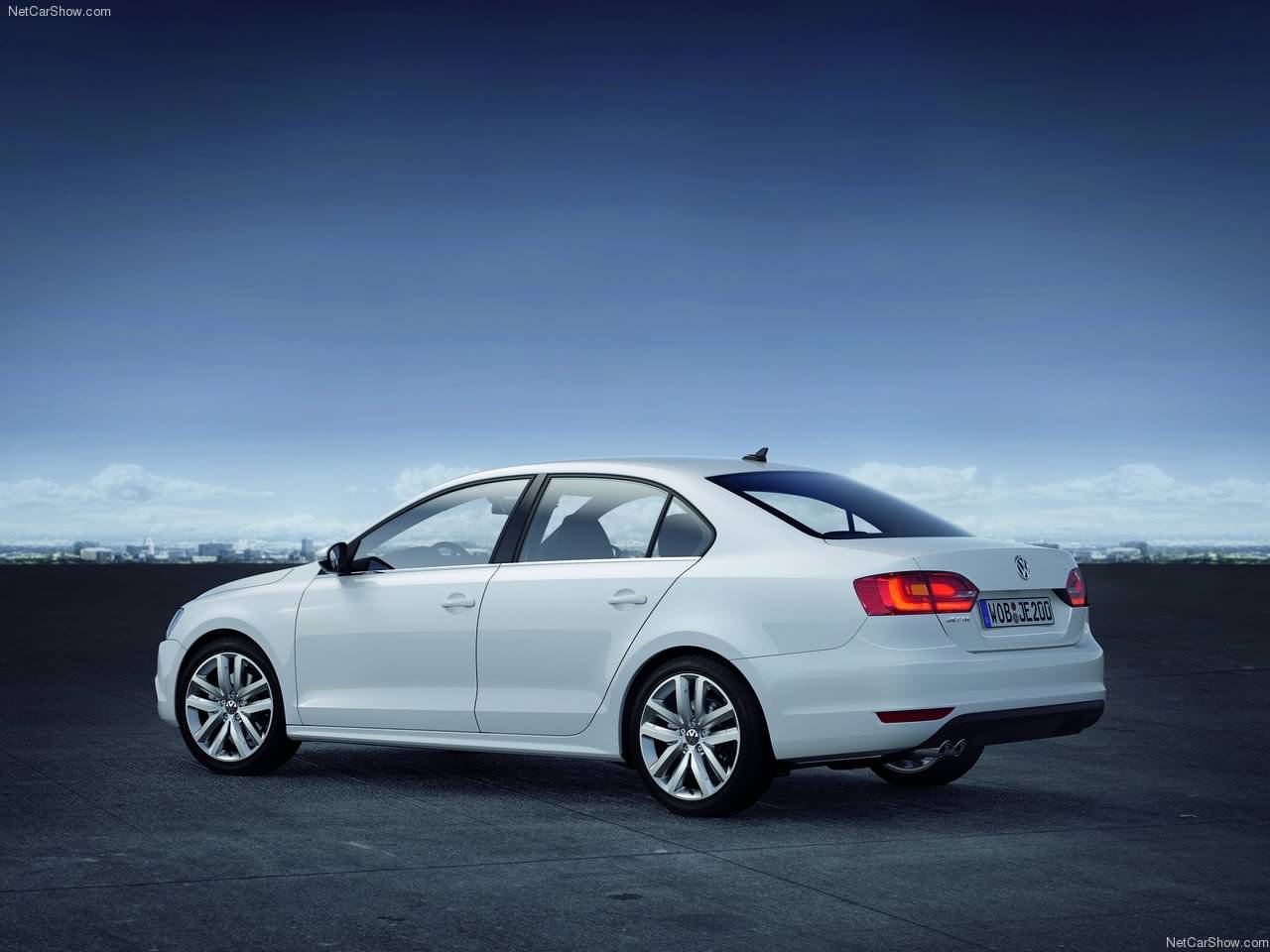
2011 Volkswagen Jetta EU Version


In the USA it is the most successful car of any European producer: the Volkswagen Jetta. Between the East and West coasts of America, up to 110,000 vehicles of this model series are sold annually. Americans value the VW Jetta as a highly safe and sporty saloon with "German Engineering." In June, Volkswagen unveiled - in an event receiving international attention with stars like Katy Perry at the centre of New York's Times Square - a completely new generation of the world bestseller with over 9.6 million units built so far. Now, the most impressive Volkswagen Jetta ever is also launching in Europe. This heralds a new era for this model series between Helsinki and Rome, Istanbul and Lisbon. The latest version of "the" saloon of the compact class is expected to carry over its US success to Europe.

This Volkswagen has the potential to do just that. Never before has a Volkswagen Jetta had this much sports appeal, this much fuel efficiency or this large a size. The times when the saloon was simply derived from the Golf are a thing of the past. From now on, these two successful models will go their own ways. The new Jetta, now significantly longer (4.64 metres long instead of the previous 4.55 metres), is very appealing as a high-end, spacious and sporty saloon with maximum active driving performance.
Volkswagen Jetta EU Version (2011)


Prof. Dr. Martin Winterkorn: "We have completely retuned the technology and styling of the VW Jetta. That is why our number 1 selling car in America will also be extending its position in Europe from now on." The Chairman of the Board of Management of Volkswagen AG continues: "At prices from €20,900, we are offering a Jetta that will add a new dimension of quality to the saloons of the compact class."

And in fact, this Volkswagen - available in Trendline, Comfortline and Highline equipment versions - takes an enormous leap forward in concept and styling. As mentioned, the saloon's design is no longer derived from the Golf; instead, it follows its own line of styling. This makes the Volkswagen Jetta a strong and independent model series just like the Eos and the Tiguan. Designers and engineers also came up with an entirely new interior. The five-seat saloon's rear seating layout is significantly more spacious (6.7 cm gain in legroom) thanks to the car's longer wheelbase - a result of the increased vehicle length. With these dimensions, the Jetta ideally fills the gap between the compact Golf (4.20 metres long) and the new large Passat (4.77 metres long).

Uncompromising efficiency

Even its smallest engines are truly great successes. Take the example of the 1.6 TDI with 77 kW / 105 PS: In the BlueMotion Technology version, this common rail turbodiesel only consumes 4.2 l/100 km (equivalent to 109 g/km CO2). Consider the 1.2 TSI that also outputs 77 kW / 105 PS and has BlueMotion Technology: This direct-injection turbo petrol engine only requires 5.3 l/100 km (equivalent to 123 g/km CO2), which is exceptional considering that this is a saloon with petrol engine that can move at 190 km/h. As already noted, the VW Jetta 1.2 TSI costs €20,900 in the Trendline version. The base price of the VW Jetta 1.6 TDI Trendline with BlueMotion Technology: €23,475. Additional power levels: a TDI with 103 kW / 140 PS and three TSIs with 90 kW / 122 PS, 118 kW / 160 PS and 147 kW / 200 PS. So, the Volkswagen Jetta is being driven exclusively by charged, high-tech, direct-injection engines. All engines except the 105 PS TSI may be combined with a dual-clutch transmission (DSG).

Three equipment lines

Trendline: The Trendline equipment line is still the entry-level model to the world of the Volkswagen Jetta. When it comes to safety, standard equipment includes six airbags (with an optional eight), five crash-optimized head restraints (on front seats with anti-whiplash design), daytime running lights, belt fastening detection, automatic hazard flasher lights that activate with hard braking, Hill Climb Assist and ABS with braking assistant and ESP with trailer stabilisation.

Exterior features of the VW Jetta Trendline include details such as 205 tyres on 16-inch steel wheels, electrically adjustable and heated door mirrors with integrated turn signals and green tinted heat-insulating glass. Inside, comfort and convenience are upgraded with details such as climate control (Climatic), dust and pollen filter, radio remote control of central locking, outside temperature indicator with road icing warning, chrome bezels for the air vents, multifunctional display (MFA) and a height-adjustable driver's seat (with fabric seat covers in "Cardeol" design).

Comfortline: The medium equipment version, the Comfortline, is offered at prices from €22,600 (VW Jetta 1.2 TSI with 77 kW / 105 PS). This model's exterior is distinguished by chrome accents in the radiator grille and 16-inch, five-spoke "Mambo" alloy wheels.

Inside, the Volkswagen Jetta Comfortline is upgraded with details such as storage pockets on the backrests of the front seats, centre armrests (with storage compartment in front), 8-way adjustment of driver and front passenger seats, comfort seats with elegant fabric upholstery in "Sienna" design, woven floor mats, the RCD 210 radio-CD system, a Chrome Pack (including rotary light switch and control dial for climate control) and what is known as the Small Leather Pack (leather-trimmed steering wheel, gearshift grip and parking brake grip) as well as black accents ("Black Pyramid"). Also standard: the Park Pilot (front and rear), lowering of the passenger side door mirror when reversing and four reading lamps (2 in front, 2 in rear).

Highline: The most exclusive Volkswagen Jetta version is the Highline equipment line. It may be ordered in combination with TSI engines from 90 kW / 122 PS (base price: €24,575) as well as all TDI power levels (base price of 77 kW / 105 PS: €25,875). Exterior features beyond those of the Trendline and Comfortline: 17-inch alloy wheels (ten-spoke "Porto" type), chrome frame around lower air intake screen, chrome trim under the side windows, headlight cleaning system and front fog lights with cornering lights.

A Winter Pack (including heated front seats and heated windscreen washer nozzles) helps to get through the coldest season of the year. Inside, features that refine the top model include sport seats with fabric covers ("Gloss") and artificial leather, particularly elegant accents ("Iridium Printed" pattern) and an automatic climate control (Climatronic).

Saturday, October 9, 2010

2011 Volkswagen Eos


In the 10th month of the year, Volkswagen is already holding its 13th model premiere: the highly successful Volkswagen Eos open-top coupé has been given an updated design and further enhanced with numerous new features.

Clearly structured and horizontally contoured, the appearance of the new VW Eos follows the code of the Volkswagen design DNA. Extending now between the new headlights is a radiator grille consisting of three shiny black struts. From behind the Volkswagen Eos stands out through its reworked, two-part LED rear lights and redesigned rear bumper with diffuser.

In technical terms, numerous new details set the 2011 Eos apart. These include the 'Premium' multi-function instrument panel with colour display, the Light Assist main beam management system and second generation Park Assist. Also new on the Volkswagen Eos is the Keyless Access system, which as a new feature also opens and closes the roof by wireless remote control. The special Light Assist system takes over the function of switching between dipped and main beam, automatically adapting this to the traffic situation. 'Cool leather', available as an option, gives a pleasant feel to the cars' seats even in hot weather. It reflects the sun's rays and thus heats up much less than standard leather.

Through the use of BlueMotion Technology fuel consumption has been further reduced. On the VW Eos 2.0 TDI 103 kW / 140 PS, for instance, the Stop/Start system and brake energy recovery bring consumption down by 0.7 litres to now just 4.8 l/100 km. The new Eos will be unveiled to the public for the first time on 17th November at the 2010 Los Angeles Auto Show, with the European launch following from mid-January 2011. Offered with a range of four turbo-charged, direct injection engines (90 kW / 122 PS to 155 kW / 210 PS), the Volkswagen Eos will have a base price in Germany of €27,975.

Share

Twitter Delicious Facebook Digg Stumbleupon Favorites More